.png)
.png)

About Our Therapy Approach
🟦Conditions We Commonly Treat
Conditions Within Our Scope of Care All of the following fall within the scope of our integrative, functional body-care approach. Note: We are not a medical facility and do not provide medical diagnosis or medical treatment. The conditions listed below indicate areas where we offer support through functional improvement of the body. Orthopedic & Musculoskeletal Issues (Musculoskeletal × Nervous System × Fascia) Low back pain Sciatica Shoulder and neck stiffness Knee pain / Hip pain Frozen shoulder Herniated disc Spinal stenosis Spondylolisthesis Myofascial pain syndrome Reduced joint mobility Hallux valgus (bunions) Finger or hand pain Autonomic & Stress-Related Conditions Insomnia Chronic fatigue Headaches Dizziness Shallow or inefficient breathing Digestive discomfort Cold sensitivity or hot flashes Low motivation Excessive stress Visceral–Postural Interactions Sluggish digestion Constipation Menstrual pain Premenstrual syndrome (PMS) Rib cage stiffness Epigastric (upper abdominal) tightness Dysfunctional breathing patterns Performance Enhancement (Sports & Professional Performance) Improved core stability Better breath–movement coordination More efficient muscle activation Enhanced body control and movement precision Injury prevention
🟦Our Approach Is Fully Integrated
Techniques are selected according to your condition that day,
integrating multiple methods as needed.

Gentle Pain-Free Manual Technique
(GP Method)
Gentle Pain-Free Manual Technique
(GP Method)
A gentle touch to calm the nervous system and support natural release.
Deepened breathing / Spontaneous relaxation / Subtle but cumulative changes / Non-painful and calming
Recommended for:
Sensitive individuals / Autonomic imbalance / First-time clients
Features of the GP Pain-Free Method ■ Gentle Work for Viscera, Cranium, and Lymphatic Flow At our clinic, the GP Method forms the foundation of care. When appropriate, we also gently address the mobility of the visceral organs, the cranial system, lymphatic pathways, and overall fluid circulation. We never apply strong pressure or forceful twisting. With a very light and respectful touch, we work quietly with visceral fascia, cranial and sacral membranes, and areas where lymphatic flow tends to stagnate. As a result, posture, breathing, autonomic nervous system balance, and organ function can begin to harmonize as one continuous, integrated flow. Some long-standing conditions that did not improve elsewhere may be related to restrictions in these subtle, less visible systems. ■ About the GP Method The GP Method is a hands-on approach that integrates principles from traditional Japanese martial arts with the brain’s reflex and regulatory systems. It aims to support the body’s natural recovery processes by promoting balance in circulation, autonomic regulation, lymphatic flow, and hormonal function. By gently addressing underlying contributors to chronic conditions, the method helps create an internal environment where positive change is more likely to occur. This approach is suitable for all ages—from young children to older adults. Because it uses micro-vibrational, non-painful touch, many people find the sessions deeply relaxing. ■ Changes Often Noted After Sessions Reduced pain reported by some clients Immediate changes felt by some individuals Easing of whole-body tension Improved overall structural balance A sense of easier or freer organ function Reduced stress and emotional tension Improved flow of meridians and subtle energy A feeling that positive changes last longer Increased neurological and cranial stability Results vary by individual. ■ What the Experience Feels Like Some clients notice subtle changes within seconds of gentle contact. For others, changes continue to unfold gradually over the days following a session. ■ Precautions Individuals with low physical resilience or significant fatigue may experience temporary drowsiness or heaviness for one to two days as the body adapts to the treatment.

Functional Movement Therapy (FMT)
Functional Movement Therapy (FMT)
Restoring proper muscle activation at an unconscious level and reducing unnecessary strain.
・Improved core stability
・Breath–movement synergy
・Better sports & work performance
Recommended for:
・Persistent pain despite exercise
・Poor posture stability
・Work fatigue
・letes
Improving Movement Quality and Supporting Functional Capacity Our bodies are deeply influenced by habitual movement patterns. Before pain appears, posture, muscle coordination, and breathing patterns have often already begun to deteriorate. Functional Movement Therapy (FMT) is a rehabilitation and neuromuscular retraining approach that aims to reorganize dysfunctional movement patterns at the brain and nervous system level. Rather than focusing on strengthening alone, this therapy prioritizes restoring efficient, natural movement. By retraining the nervous system so that muscles and joints activate with appropriate timing and coordination, unnecessary strain on the body can be reduced. As movement becomes more efficient, many people experience reduced pain and fewer recurrences. Experiences and outcomes vary by individual. Purpose Pain reduction Support for recurrence prevention Improved movement efficiency Enhanced physical performance This approach reflects the globally recognized concept of the functional approach to movement and rehabilitation. What Is the Balance Restoration Method? This is not conventional strength training. It is an approach that restores proper timing and intensity of muscle activation, helping to rebalance the body as a whole. Ultimately, the goal is to help individuals regain greater control over their own movement and posture. Addressing Underlying Contributors to Dysfunction Physical problems are rarely caused by simple muscle weakness alone. Most issues involve a combination of factors, such as: Long-term postural imbalance and habitual movement patterns Restricted mobility due to chronic muscle tension Reduced circulation related to stress Poor coordination between visceral organs and the musculoskeletal system These factors can overlap and contribute to chronic pain conditions. The Vicious Cycle of Muscular Imbalance Underused muscles → become weak Overused muscles → become stiff Reduced mobility → pain is more likely to occur Breaking this cycle is a key element in preventing recurrence. Preventing Recurrence Even if pain is relieved temporarily, symptoms may return if underlying movement habits remain unchanged. By repeatedly reinforcing appropriate movement patterns, the body can gradually become more resilient to daily physical stress. Toward Unconscious-Level Motor Improvement Traditionally, rehabilitation focused on identifying weak or restricted areas through muscle strength and range-of-motion testing. However, real-life movement does not rely on single muscles in isolation— it is a coordinated process involving multiple joints and muscle groups. For this reason, FMT evaluates the body as an integrated kinetic chain, rather than isolated structures. At our clinic, we do not simply increase repetitions or load. We emphasize improving the quality of movement. Even if mobility improves temporarily, habitual movement patterns may continue to overload the same areas. Our goal goes beyond hands-on care— we facilitate neuromotor learning so that healthier movement patterns become more automatic and unconscious over time. Muscle Imbalance and the Negative Cycle Postural (tonic) muscles tend to stiffen easily, while phasic muscles are more likely to weaken. When back extensors become overactive, abdominal muscles often fail to engage effectively. This phenomenon, known as muscle imbalance, reduces movement efficiency and promotes a negative cycle of dysfunction. If hip mobility decreases, stress is often transferred to the knees and lower back. Therefore, it is essential to assess overall movement patterns, not just the location of pain. Rebuilding Functional Control We assess posture, movement, and joint control to retrain more efficient motor strategies. With continued practice, this approach may help reduce physical load and lower the likelihood of symptom recurrence. Rather than striving for perfection, we value gradual progress— becoming just a little better than yesterday.

Neo-Japanese Enmeigaku Therapy
Neo-Japanese Enmeigaku Therapy is a uniquely Japanese body-regulation method that supports organ positioning, subtle visceral motion, and fluid dynamics.
It addresses areas that standard bodywork often cannot reach, such as chronic coldness, poor circulation, and autonomic imbalance.
It is often used as supportive care for people experiencing gastric ptosis, chronic coldness, menstrual discomfort, unexplained fatigue, and systemic sluggishness.
Releasing Lymphatic Congestion to Support Organ Function — Applying the Practical Essence of Shin Nihon Enmei-gaku in a Modern Context — Shin Nihon Enmei-gaku is a Japanese bodywork philosophy systematized during the Showa era. It emerged in a historical period when medical resources were limited, emphasizing palpation, manual sensitivity, and the observation of bodily “flow” and “stagnation.” Rather than focusing on disease names, this system sought to understand how circulation, tension, and structural restriction influence overall vitality. Particular attention was given to areas where lymphatic, vascular, and neural pathways converge: The groin (inguinal region) The underarms The lower abdomen These regions were considered prone to developing lymphatic congestion or tissue firmness, which could influence systemic balance. Our Clinical Perspective At Enmeidou, we do not adopt Shin Nihon Enmei-gaku as a belief system. Instead, we reinterpret its practical elements through the lens of modern anatomy, physiology, and clinical reproducibility. Using gentle manual techniques, we aim to support: Lymphatic flow Blood circulation Neural reflex regulation Visceral mobility The intention is not to “treat disease,” but to help the body regain conditions in which physiological functions can operate more smoothly. No forceful pressure or aggressive manipulation is used. Why Organ Position and Motion Matter Internal organs are designed to move subtly with breathing and posture. However, prolonged sitting, postural strain, stress, or abdominal tension may restrict this natural mobility. When this occurs, some individuals experience: Sluggish digestion Coldness in the abdomen or lower body General fatigue Through gentle abdominal work, we support healthier organ positioning, mobility, and internal circulation. Sensations Commonly Noted After Sessions Some clients report sensations such as: A gentle warmth arising from within Lightness in the lower abdomen or legs Easier, deeper breathing These responses are considered possible signs of shifting circulation, metabolic activity, and autonomic balance. Responses vary by individual. Conditions This Approach May Support As part of health maintenance and functional support, this approach may be helpful for: Discomfort associated with gastric ptosis Chronic cold sensitivity Menstrual discomfort or cycle irregularity General physical support during fertility planning Tension associated with elevated blood pressure Non-specific systemic symptoms Chronic fatigue Stress- and overwork-related dysfunction This is not medical treatment. Individual responses vary. About Statements in the Original Texts (Important) Original texts of Shin Nihon Enmei-gaku include claims such as: “All diseases originate from muscle stiffness” or “Cancer can be cured easily.” These statements differ greatly from modern medical science. At Enmeidou, we do not endorse or promote these claims. We selectively apply only the practical concept of relaxing the thighs and lower abdomen to improve circulation as a supportive, non-medical approach to overall well-being. Diagnosis and treatment of disease should always be performed by qualified medical professionals.
DRX Method
Releasing deep adhesions and stagnant blood to help relieve pain
Case Examples
with major improvement after 1 session and symptoms becoming minimal after 3 sessions
(individual experiences vary).
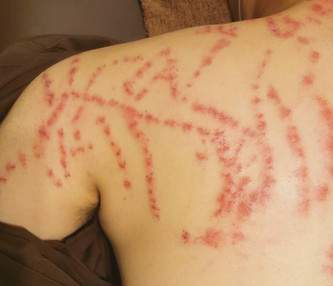

marked improvement in 2 sessions, with better sleep
(individual experiences vary).
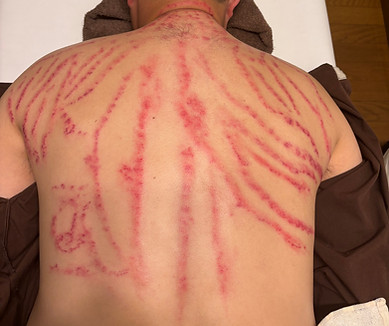


pain greatly reduced in daily life after 8 sessions
(results are not guaranteed and vary by individual).
What Is the Deep Release Method® The Deep Release Method® uses specialized manual techniques together with a natural therapeutic cream to gently release deep tissue adhesions and stagnant blood, known in Japanese medicine as “oketsu.” Unlike deep-pressure massage, this method reaches deeper layers through gentle, non-invasive techniques, without forcing or aggressive pressure. As a result, many clients describe significant pain reduction and a light, floating sensation in the body after the session. Individual experiences may vary. About the Therapeutic Cream A Unique Cream Made from 100% Natural Ingredients During treatment, we use a specially formulated cream made entirely from natural botanical and skin-conditioning ingredients. The cream helps to: Protect and soften the skin Reduce friction Enhance the effectiveness of gentle manual techniques in deeper tissues Key Ingredients The cream contains a carefully selected blend of natural components, including: Squalane Grape seed extract Paeony root Angelica root Purple gromwell Various herbal extracts Vitamin E These ingredients are chosen to be skin-friendly while supporting the overall quality and comfort of the treatment.
Gentle by Default. Deeper Work Only if You Request It. Our treatments begin with a gentle, low-pressure approach. This allows even first-time clients or those sensitive to pressure to receive care in a safe and relaxed way. When deeper fascial restrictions, adhesions, or limited mobility are present, we may optionally incorporate techniques such as Shin-Nihon Enmei-gaku and the Deep Release Method to access deeper layers of tissue. These deeper techniques are optional, not mandatory. Prefer comfort → gentle session only Prefer maximum effect → deep release can be added Pressure and intensity can be adjusted at any moment based on your condition and preferences. You never need to tolerate excessive discomfort. If anything feels too intense, please let us know. We will always work within a level that feels safe and comfortable for your body.
