.png)
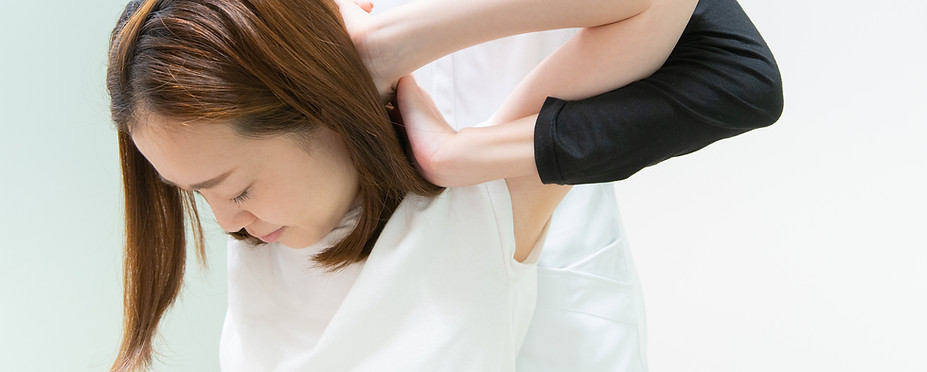
Neck & Shoulder Tension
|Enmeidou Body Care Clinic, Kurashiki
Neck and Shoulder Tension
Neck and shoulder tension can be influenced by various factors such as lifestyle habits, posture, muscle fatigue, and the overall balance of the body.
At our clinic, we look not only at the local muscle tension but also consider broader aspects such as posture, breathing patterns, body fluid circulation, and autonomic balance.
We provide care with a whole-body perspective.
We do not offer medical diagnosis or treatment.
Within the scope of manual bodywork, we carefully observe your condition and help identify patterns of strain and movement habits that may be contributing to your discomfort.
Factors That May Contribute to Neck and Shoulder Tension
There are several factors commonly associated with neck and shoulder discomfort.
Below are patterns frequently observed from a manual therapy perspective.
① Muscle Fatigue and Tension
Long periods of sitting or repetitive tasks can place continuous load on the muscles of the neck and shoulders.
This often leads to a feeling of tightness or heaviness.
The upper trapezius, in particular, tends to accumulate tension easily in daily life.
② Postural Patterns (Upper Crossed Posture)
Using a computer or smartphone for extended periods may cause the head to shift forward, increasing strain on the neck and shoulders.
This pattern, often referred to as an “upper crossed posture,” involves overactive muscles and underactive muscles, creating an imbalance that can make tension persist.
③ Shallow Breathing and Reduced Rib Mobility
When breathing becomes shallow and the rib cage expands poorly, the neck and shoulder area may compensate and become tense.
Tension around the diaphragm can influence how freely the upper body moves.
④ Influence of the Autonomic Nervous System (Stress & Lifestyle)
Stress and disrupted daily rhythms may heighten the sensation of muscle tightness.
Emotional tension is known to correlate with physical tension around the neck and shoulders.
Creating space to relax can be helpful.
⑤ Circulation of Body Fluids (Blood & Lymph)
Maintaining the same posture for long periods may reduce local circulation in the neck and shoulder region.
Feelings of heaviness or stiffness may relate to this reduced flow.
※ This is not a medical diagnosis or medical treatment.
Our Approach to Neck and Shoulder Tension
At Enmeidou, we assess the body from multiple angles to help reduce unnecessary strain and encourage more comfortable movement.
① Posture and Movement Assessment
We observe posture and movement habits to identify areas that may be overloaded or compensating.
② Breathing and Thoracic Mobility Check
The quality of breathing and the mobility of the rib cage often relate to neck and shoulder tension.
③ Whole-Body Balance (Muscular & Fascial Mobility)
We examine how the muscles and fascia glide and how different regions of the body coordinate.
This allows us to focus not only on the shoulders but on the overall balance of the body.
④ Checking Tension Around the Organs
(From a Manual Therapy Perspective)
※ We do not treat internal organs.
※ This is not a medical diagnosis.
Many fascial and neural connections surround the organs.
Tension in these surrounding areas may influence movement patterns.
Within the safe and permitted scope of manual therapy, we gently assess the surrounding tension to support smoother whole-body coordination.
People Who Commonly Visit Us
-
Want to ease neck/shoulder tightness
-
Feel heaviness after long hours of desk work
-
Experience only temporary relief from massage
-
Feel that breathing is shallow
-
Want to improve posture
-
Prefer a whole-body approach rather than focusing only on one area
※ Effects vary from person to person.
Important Notes
-
We are not a medical institution.
-
We do not provide medical diagnosis or treatment.
-
We do not cure illnesses or diseases.
-
Results are not guaranteed.
-
If medical evaluation is needed, we recommend consulting a healthcare professional.