.png)
Case Studies & Client Testimonials
Not about “being cured,” but about “regaining your innate ability to heal.
— Moments of change, and words of relief and joy —
Please note that the interview videos featuring patient cases are conducted in Japanese.
Subtitles are not provided. Please use YouTube’s automatic translation feature if needed.
■ A woman in her 40s taking nearly 70 pills per day
Remarkable Transformation Within Six Months: Part 1
Remarkable Transformation Within Six Months: Part 2
■ Mr. M, a business owner in his 40s
Avoided elbow surgery through treatment
■Mr. M, office worker in his 30s living in Tsuyama
Came for trigger finger—experienced improvement in chronic rhinitis as well
Case Examples
Severe arm & shoulder pain causing insomnia →
major improvement after 1 session, resolved after 3
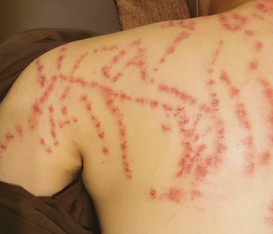
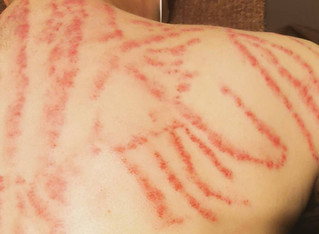
Extreme back tightness & fatigue →
resolved in 2 sessions, sleep normalized


Post-fracture surgical pain & sleeplessness →
fully resolved after 8 sessions


■ Visceral & Autonomic Dysfunction — Female in Her 30s (Healthcare Worker)
Persistent shortness of breath, palpitations, and insomnia despite “no abnormal findings” on medical tests.
Upper-body hypertonicity, shallow breathing, and disturbed diaphragmatic and visceral serosal pressure balance were identified as key factors.
Restoring cranial, cervical, and diaphragmatic rhythms led to deeper, calmer breathing.
“It felt like both my body and mind finally relaxed.”
■ Abdominal Discomfort — Female in Her 40s (Office Worker)
Ongoing abdominal pressure despite being told “nothing is wrong” at three different clinics.
Excessive diaphragmatic tension, mesenteric restriction, and disrupted serosal pressure balance were contributing factors.
Rebalancing thoracic and pelvic pressure dynamics relieved the discomfort.
“A year and a half of discomfort vanished like a dream.”
■ Chronic Headache — Female in Her 30s (Healthcare Worker)
Subtle cranial strain combined with jaw clenching and fascial distortion extending from the neck to the upper back.
Balancing the temporomandibular joint (TMJ), cranial rhythm, and cervical–thoracic tension reduced headache frequency.
“Even my vision feels clearer.”
■ Post-Surgical Shoulder Pain — Female in Her 70s (Retired Teacher)
Persistent shoulder pain despite two surgical procedures.
Lower-limb imbalance caused pelvic torsion, transmitting strain through the spine to the shoulder.
Correcting whole-body torsional patterns eliminated nighttime pain.
“I never imagined the root cause was my legs.”
■ Chronic Shoulder Tension — Female in Her 40s (Desk Worker)
Beyond muscular tension, visceral–somatic reflexes and postural pattern bias contributed to symptoms.
Balancing the pelvis, thorax, and cervical spine deepened breathing and reduced shoulder load.
“My breathing deepened, and my whole posture feels aligned.”
■ Difficulty Sitting on Knees (Seiza) — Female in Her 60s (Homemaker)
Restricted coordination among the hips, knees, and ankles prevented comfortable kneeling.
Restoring flexor–extensor coordination enabled natural, pain-free kneeling.
“I cried the moment I could kneel again.”
■ Hallux Valgus Pain — Female in Her 50s (Retail Worker)
Foot pain was influenced not only by toe deformity but also by trunk torsion and habitual loading patterns.
Adjusting tarsal mechanics, plantar muscle balance, and pelvic–spinal alignment redistributed stress.
“My foot pain is gone, and even my posture changed.”
■ Sciatic-Like Numbness — Male in His 60s (Technical Worker)
Numbness was not solely lumbar in origin; pelvic torsion, hip imbalance, and lower-leg tension were involved.
Improving whole-body coordination reduced irritation around the sciatic nerve.
“I can play golf again.”
■ Golfer’s Elbow — Male in His 40s (Sports Enthusiast)
Elbow pain originated from dysfunctional trunk rotation and limited scapular mobility.
Enhancing pelvis–core–shoulder coordination resolved the pain.
“My swing feels stable again.”
■ Orthostatic Dysregulation — Junior High School Student
Disrupted cranial, cervical, diaphragmatic, and pelvic rhythms impaired autonomic regulation.
Restoring systemic rhythm and circulation improved orthostatic tolerance, making mornings easier.
“I can get up by myself in the morning now.”
■ Postpartum Pelvic Pain & Urinary Incontinence — Female in Her 30s (Homemaker)
Reduced pelvic-floor function, visceral descent, and pressure imbalance were identified as contributing factors.
Coordinating pelvic, diaphragmatic, and serosal rhythms led to symptom improvement.
“Caring for my baby feels so much easier now.”
■ Insomnia & Fatigue — Male in His 40s (Manager)
Restricted cranial, cervical, and thoracic mobility combined with pressure imbalance reduced circulation.
Balancing cranial rhythm and respiratory mechanics restored deep, restorative sleep.
“I slept deeply for the first time in years.”
■ Dizziness & Unsteadiness — Female in Her 50s (Healthcare Worker)
Neck and occipital tension, reduced inner-ear circulation, and disrupted thoracic and serosal pressure balance caused persistent dizziness.
Rebalancing systemic pressure improved stability and daily confidence.
“I can live my daily life without fear now.”